When Bread Gets Its Own “Room”: A Smarter Way to Sell Fresh Bread by Vending Machine
In Poland, a bakery chose a different approach to automated bread sales.
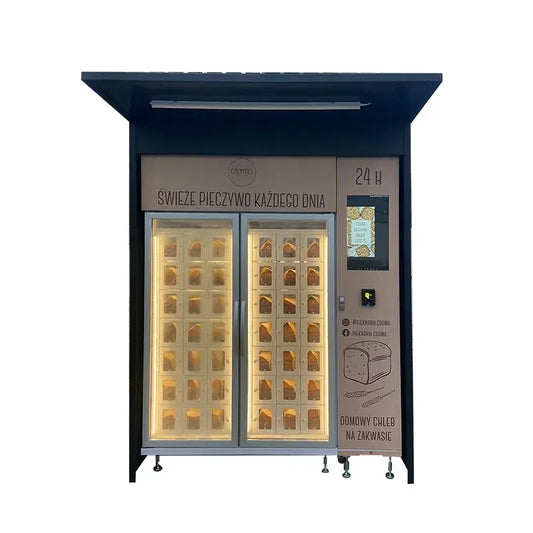
Instead of using a traditional spiral vending machine, the business installed a locker-style bread vending machine designed for selling fresh bread in outdoor environments.
Behind the clear glass front, each loaf is placed in its own individual compartment. This creates a clean presentation and addresses common concerns bakeries face when introducing unattended sales.
1. Why Bread Requires a More Suitable Vending Structure
Bread is not a standard packaged snack.
For bakeries producing sourdough or artisan-style bread, the key concern is not whether a vending machine supports refrigeration or basic freshness management — most modern machines already do.
The real challenges lie in product form and handling, including:
- Preserving the original shape and appearance of each loaf
- Gentle handling during the selling process
- Clear matching between each product and its own expiry setting
- Reducing manual effort in daily freshness checks
This is why the Polish customer chose a compartment-based vending system, which better matches how bread is produced, stored, and sold.

2. Individual Compartments for Better Bread Handling
The machine is configured with 42 independent compartments, allowing each loaf to be stored separately.
This structure provides:
- No contact or pressure between products
- Stable positioning during purchase and pickup
- Clear visibility for customers
- Easier batch and product-type management
From an operational perspective, this makes bread vending more controlled and predictable.
3. Stable Cold Air Circulation for Outdoor Operation
Each compartment includes airflow openings that allow cold air to circulate evenly throughout the cabinet.
This helps maintain a stable internal environment, which is especially important for outdoor installations.
Operators can monitor internal temperature remotely and receive alerts if abnormal conditions occur, reducing the need for on-site checks.
4. Expiry Date Management Built for Bakery Workflows
The system allows operators to set a freshness period for each bread product, rather than selling items until manually removed.
As a product approaches the end of its shelf life, the system can:
- Send email reminders
- Apply near-expiry discounts to encourage faster sales
Once the expiration time is reached, the product is automatically removed from sale and can no longer be selected on the screen. This reduces food safety risks and reliance on manual checks.
5. Inventory and Sales Visibility
The system provides:
- Inventory alerts for timely restocking
- Sales data by compartment, showing which bread types perform better in unattended scenarios
This allows bakeries to manage the vending machine as a practical extension of their existing operation.
6. Extending Sales Without Extra Labor
Installed outdoors and protected by a canopy, the machine operates independently of store opening hours.
A 22-inch display presents product information clearly in public environments.
For the bakery, this means:
- 24/7 availability without additional staff
- Continued sales during evenings, early mornings, and holidays
- An automated retail point that complements, rather than replaces, the physical store
7. A Bread-Focused Vending Example
This Polish project shows that successful bread vending is less about adding features and more about choosing a structure that fits the product.
By combining:
- Individual compartments
- Stable cold air circulation
- Structured expiry management
- Automated reminders and sales control
the vending machine becomes a reliable retail tool for fresh bread sales.