Food Safety Standards for Bakery Vending Machines: What Operators Need to Know
Aktie
Why Food Safety Is Non-Negotiable in Bakery Vending
Selling fresh baked goods through a vending machine introduces a set of food safety responsibilities that traditional bakery counters don't face in the same way. There is no staff member checking product condition before handing it to a customer. There is no visible interaction that signals something is wrong. The machine operates autonomously — and that means the operator must build food safety into the system itself, not rely on human judgment at the point of sale.
For bakery vending operators, understanding food safety standards is not just a regulatory requirement. It is a core part of running a business that customers trust and return to.
Temperature Control: The Foundation of Fresh Bakery Vending
Fresh bakery products — cream cakes, custard pastries, fresh bread — are perishable. Temperature is the single most important variable in keeping them safe and sellable.
Refrigerated Products
Products containing fresh cream, eggs, or dairy must be stored at 2–8°C at all times. A machine that allows temperature to drift — even briefly — creates conditions for bacterial growth that customers cannot detect visually. When evaluating a bakery vending machine, confirm that the refrigeration system maintains a stable temperature range.
Ambient Products
Packaged cookies, wrapped muffins, and shelf-stable bread products can be stored at room temperature, but still require protection from humidity and heat. Machines placed in direct sunlight or near heat sources can compromise ambient products even without refrigeration failure.
Temperature Monitoring
Modern smart vending machines include built-in temperature sensors that send alerts when conditions fall outside the safe range. This remote monitoring capability is essential for operators managing multiple machines across different locations — it removes the need for daily physical checks while maintaining safety standards.
Expiry Date Management
Fresh bakery products have short shelf lives. Managing expiry dates manually across multiple machines and product lines is error-prone and time-consuming. Smart vending software addresses this directly.
The expiry date of each product can be easily entered into the system. The software then tracks each item and can:
- Alert the operator when products are approaching their expiry date
- Automatically disable sale of expired items
This automated approach reduces the risk of expired products reaching customers and gives operators clear data to improve restocking schedules. It also creates an audit trail — useful if questions about product safety ever arise.
Machine Hygiene and Cleaning Protocols
A vending machine that stores food must be cleaned regularly. Unlike a bakery counter that staff clean at the end of each shift, a vending machine requires a deliberate cleaning schedule built into operations.
Interior Cleaning
The interior surfaces of the machine — shelves, compartments, dispensing mechanisms — should be wiped down and sanitized on a regular schedule. For refrigerated machines, this typically means a full clean every one to two weeks, depending on product type and turnover volume. Any spillage or product damage inside the machine should be addressed immediately during the next restock visit.
Locker-Style Machines
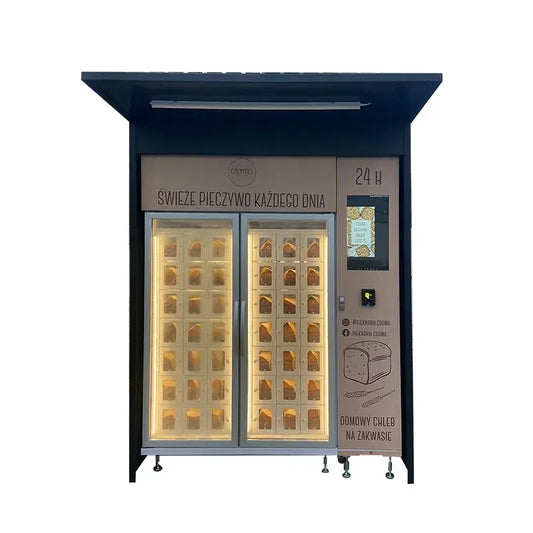
Locker vending machines, where each product occupies its own compartment, are easier to maintain hygienically than spiral or elevator machines. Each compartment is isolated, so contamination from one product does not affect others. This design also makes cleaning more straightforward — each locker can be wiped individually without disassembling the machine.
Exterior and Touchpoints
The screen, payment terminal, and any customer-facing surfaces should be cleaned regularly. In high-traffic locations, daily cleaning of touchpoints is a reasonable standard. This is as much about customer perception as it is about hygiene — a visibly clean machine builds confidence in the product inside.
Certifications That Matter for Bakery Vending Equipment
When purchasing a bakery vending machine, certifications confirm that the equipment meets minimum safety and quality standards. The relevant certifications depend on your market.
CE Certification
Required for machines sold or operated in the European Economic Area. CE marking confirms that the machine meets EU standards for electrical safety, electromagnetic compatibility, and mechanical safety. Operating a non-CE-certified machine in the EU is a regulatory violation and may affect your insurance coverage.
RoHS Compliance
RoHS (Restriction of Hazardous Substances) compliance confirms that the machine does not contain restricted levels of hazardous materials such as lead, mercury, or cadmium. This is relevant both for regulatory compliance and for the environmental credentials of your operation.
Local and Market-Specific Requirements
Beyond equipment certifications, operators may need to comply with local food business registration requirements, health department inspections, or food handler certifications depending on their jurisdiction. These vary significantly by country and region — check with your local food safety authority before launching.
Packaging as a Food Safety Tool
In a vending environment, packaging does more than protect the product during transit. It is the primary barrier between the product and the machine environment, and between the product and the customer's hands.
Effective packaging for bakery vending should:
- Seal the product completely to prevent contamination from the machine interior
- Be robust enough to withstand the dispensing mechanism without tearing or crushing
- Display the product name, ingredients, allergen information, and expiry date clearly
- Be appropriate for the storage temperature (some packaging materials are not suitable for refrigerated environments)
Allergen labelling deserves particular attention. Customers with food allergies rely on accurate labelling to make safe choices. In many markets, allergen disclosure on pre-packaged food is a legal requirement. Ensure your packaging meets the labelling standards of every market where you operate.
Building a Food Safety Routine Into Your Operations
Food safety in bakery vending is not a one-time setup — it is an ongoing operational discipline. The operators who maintain the highest standards are those who build safety checks into their regular routines rather than treating them as separate tasks.
A practical approach:
- Check temperature logs remotely before each restock visit — if the machine has been out of range, investigate before loading new product
- Record expiry dates for every product loaded and confirm the machine software has been updated accordingly
- Clean the machine interior on a fixed schedule, not just when it looks dirty
- Keep a simple log of cleaning dates, temperature checks, and any product removals — this creates accountability and a record if questions arise
- Review waste data monthly to identify products that are consistently expiring before sale, and adjust order quantities or restocking frequency accordingly
These habits take little time once established, but they make a significant difference to product quality, customer trust, and regulatory compliance.
Food Safety as a Competitive Advantage
In a market where customers cannot inspect products before purchase, trust is the deciding factor. A bakery vending operation that visibly maintains high hygiene standards — clean machines, clear labelling, fresh products — builds a reputation that drives repeat business.
Operators who treat food safety as a minimum compliance requirement miss the opportunity to use it as a differentiator. Communicating your standards to customers — through signage, packaging, or your online presence — turns a regulatory obligation into a marketing asset.
For bakery vending businesses looking to scale, food safety infrastructure also becomes a prerequisite for accessing premium locations. Shopping centers, hospitals, corporate campuses, and other managed environments increasingly require documented food safety practices from vending operators before granting placement approval.
Building those practices from the start — rather than retrofitting them later — is the more efficient path to sustainable growth.